
How to Support Evanston’s Bike Plan Update:
Here are tips to maximize your advocacy for safer streets and better biking in our community-
#1: Support specific corridors and improvements.
“We need protected bike lanes on Main St from the Channel to Ridge for better east-west connectivity.”
“Extend our Lakefront Path along Sheridan Road at Calvary Cemetery.”
“Upgrade Church and Davis Street downtown with concrete barriers to stop illegal parking by cars/ trucks.”
“Create a greenway on Lincoln/Harrison Street connecting Skokie’s Old Orchard Trail to Sheridan Road and Northwestern University.”
“Build a sidepath along Oakton east of Dodge connecting Chute, Oakton, and Prieto Center.”
“Asbury between Howard and Church should have protected lanes.”
#2: Emphasize comprehensive and high-quality design standards.
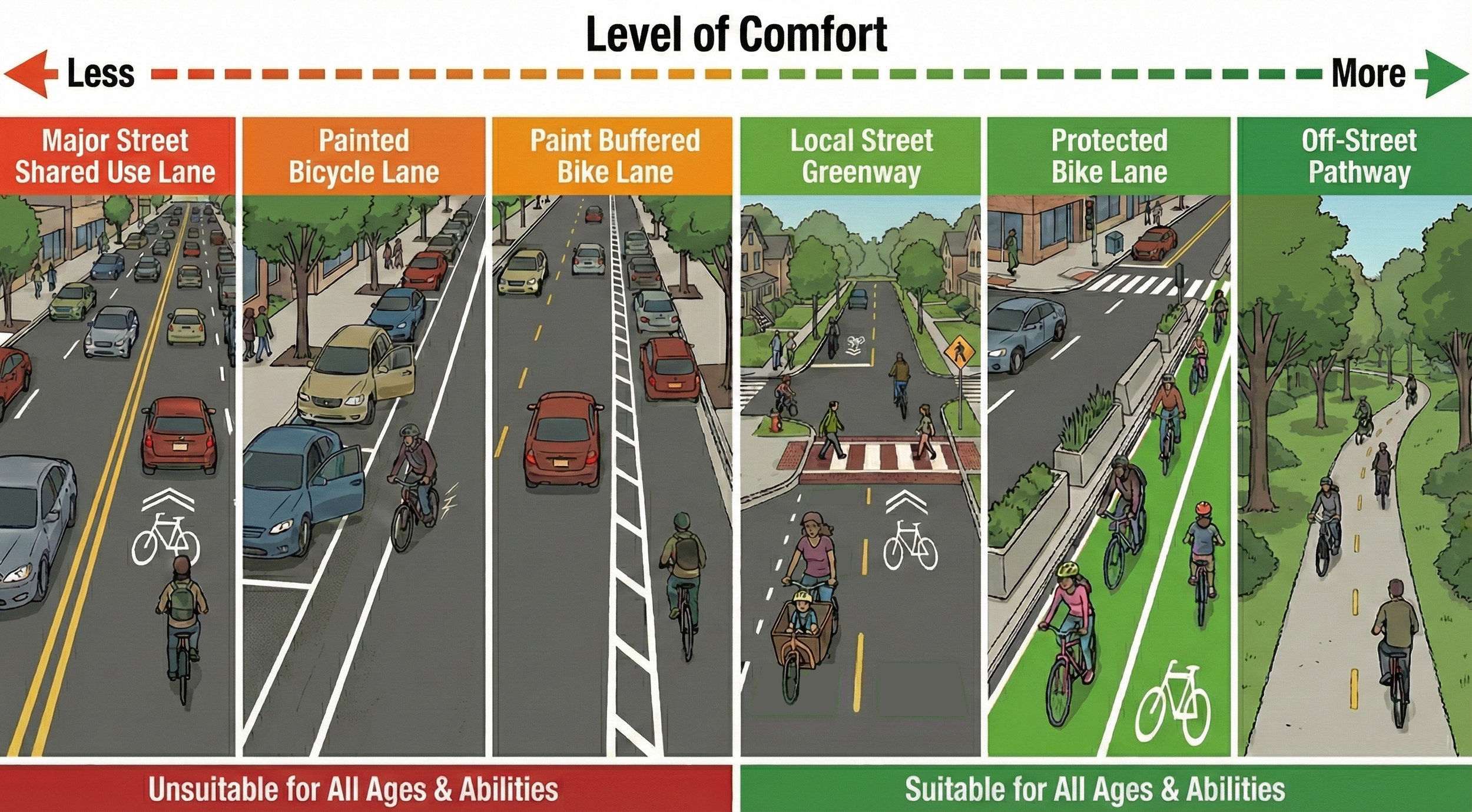
“We need a bike network for All Ages and Abilities.”
“Paint is not protection. Busy roads need protected lanes, not just signs and ‘shared lane’ markings.”
“We need to prioritize raised pedestrian crossings, bus boarding islands, and protected bike lanes/intersections near schools.”
“Bikeways that are safe and comfortable for the entire population, from children to seniors, enable cycling to become a viable daily transportation mode for everyone.”
#3: Be ready to educate and raise awareness.
“Studies show 2/3rds of people are interested in biking but are concerned about safety.”
“Bike lanes reduce parking/road congestion and sidewalk riding, making our streets better for everyone including drivers and pedestrians.”
“Over half of all car trips in the US are less than 3 miles, equivalent to a 20-minute or less bike ride. With the same door-to-door convenience of cars, converting even a fraction of these trips to bikes would bring huge societal benefits.”
“Biking is good for our planet, our health, and our local shops. Streets that are redesigned with bike lanes see increased property values, more business activity, and improved safety and air quality.”
“A bike is affordable transportation for those who cannot afford the $12,000 average annual cost of car ownership.”
“Projects like Chicago Avenue have been designed to offset (and in some cases even increase) the amount of parking available to residents, customers and visitors. We should continue to be bold and proactive when improving our streets for walking, bicycling, and transit, with creative solutions to address our parking needs.”